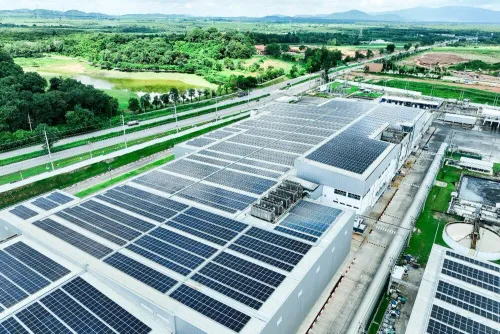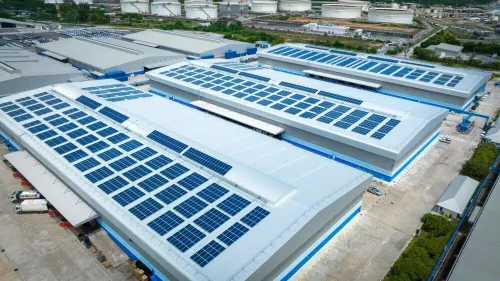
A commercial solar installation is more than panels fixed to a roof: it involves load analysis, structural checks, electrical protection, utility approval and documented commissioning. By the end, you will know what an installation service should deliver, which system configuration fits your premises and how to compare competing proposals on more than panel warranty length.
Key takeaways
- Request the technical design, financial model and grid-connection plan before procurement.
- Match system capacity to daytime loads, roof structure and expansion plans.
- Check whether the quote includes approvals, testing, monitoring and handover documents.
- Compare installers on engineering, safety controls, documentation and after-sales support.
What the installer delivers before equipment reaches your site
Before equipment arrives, a business solar installation service should complete the technical design, financial model, structural checks and grid-connection plan, then give you documents that expose risks before procurement.
1. Provide a site survey covering roof condition, shading, access, usable area, cable routes, electrical rooms, earthing and fire-safety constraints.
2. Analyse 15-minute or half-hourly load data, not annual consumption alone. The report should show daytime self-consumption, peak demand, shift patterns, weekends and expected export.
3. Match the design to sanctioned load, contract demand, service voltage, transformer capacity, protection equipment and the distribution utility’s current approval and metering process.
4. Submit structural calculations, single-line diagrams, equipment schedules and a generation estimate. State assumptions for soiling, shading, degradation, availability, inverter and temperature losses, clipping and export limits.
5. Model commercial tariffs, taxes, financing, depreciation and export compensation. Do not insert PM Surya Ghar residential subsidy into an ordinary commercial project.
6. Define battery capacity from critical loads and outage duration. Specify usable kilowatt-hours, charge and discharge power, depth of discharge, efficiency, temperature limits, fire protection and warranty throughput.
7. Put module degradation, inverter response, workmanship, spare parts, monitoring ownership, raw-data access and warranty-related travel, lifting, shutdowns and reinspection into the procurement scope.
The pack should also identify the proposed on-grid, off-grid or hybrid arrangement, expected approvals, customer-provided records and every assumption behind the quotation.
How a commercial solar project moves from survey to handover
A business solar installation in nashik starts with records, not panels. Provide 12 months of electricity bills, 15-minute or half-hourly load data, sanctioned load, contract demand, service voltage, single-line diagrams, roof drawings, structural reports, property documents and a site contact. Confirm operating hours, shutdown windows and access rules.
1. Surveyors inspect roof or ground area, shading, drainage, cable routes, transformer capacity, protection equipment and mounting points. They photograph hazards and identify space for inverters, batteries and earthing.
2. The design team matches system size to daytime demand, machinery start-up loads, roof strength and export limits. The proposal states assumptions for shading, soiling, degradation, availability, inverter and temperature losses, clipping and the production measurement method.
3. The installer submits the interconnection application and obtains written utility approval for the applicable metering arrangement. Do not approve procurement on a generic net-metering promise; Maharashtra rules and utility procedures change.
4. After approval, the crew installs mounting structures, modules, DC and AC cabling, inverters, earthing, lightning protection and labelled isolators. Coordinate roof access, material storage and any planned electrical shutdown with the installer.
5. Testing checks polarity, insulation resistance, earthing, protection settings, inverter operation and meter function before energisation. Handover should include as-built drawings, test results, warranties, monitoring access, operating instructions and a maintenance schedule. Ask who reports faults after commissioning.
How system size and configuration should match your operations
Size the array from 15-minute or half-hourly interval data, not annual consumption alone. The profile shows daytime self-consumption, shift changes, weekend demand, machinery start-up peaks and energy likely to be exported. For solar for company in Nashik, reducing daytime imports can beat maximum annual generation because demand charges and low-value exports weaken payback.
Use this sizing checklist:
- Match PV output to daytime load, sanctioned load and contract demand; do not promise capacity before checking service voltage, transformer capacity, protection equipment and the utility’s approval and metering process.
- Measure usable roof area, allowable dead load, wind uplift, corrosion, drainage, access paths and roof age. Excluded repairs or leakage remediation can erase a low EPC quote.
- Specify batteries from critical loads and outage duration, using usable kilowatt-hours, maximum charge and discharge power, depth-of-discharge limits, round-trip efficiency, temperature limits, fire protection and replacement assumptions.
| System type | Best fit | Main limitation |
|---|---|---|
| On-grid | Reliable grid, strong daytime load, no outage backup | Shuts down during a grid failure |
| Off-grid | No dependable grid and fully independent operation | Needs oversized PV and substantial storage |
| Hybrid | Frequent outages, critical loads and daytime solar use | Costs more and requires battery maintenance |
Choose hybrid when servers, pumps, refrigeration or production controls must continue during outages. Keep non-critical loads off the backup circuit so a short outage does not exhaust the battery.
What Nashik grid approvals and project documents cover
Before connecting a business solar installation in nashik to the Maharashtra network, check four document groups: utility approval, property authority, structural safety and commissioning records. Do not rely on a generic net-metering promise; obtain written approval from the applicable distribution utility, such as MSEDCL, under its current process.
| Document group | Check for | Why it matters |
|---|---|---|
| Utility | Sanctioned load, contract demand, service voltage, transformer capacity, protection scheme, interconnection approval and meter-change approval | The utility may reject a system that exceeds network or connection limits |
| Property | Ownership or lease papers, landlord consent, society or industrial-estate permission, roof-access rights and electricity bill in the applicant’s name | A tenant cannot authorise roof work or export arrangements without documented authority |
| Structural | Signed roof assessment covering allowable dead load, wind uplift, roof age, corrosion, drainage, parapet attachment, access paths and permitted penetrations | Weak mounting or uncontrolled drilling creates safety and leakage liabilities |
| Commissioning | Single-line diagram, as-built layout, test reports for insulation, earthing and protection, inverter settings, serial-number register, commissioning certificate and utility inspection record | Missing records delay energisation and weaken warranty or insurance claims |
Also verify whether the project uses net metering, gross metering or another export settlement, and confirm the eligible consumer category and settlement period in writing. Include the approved design, tariff assumptions and final meter details in the handover file.
What the quoted installation scope includes—and what it may leave out
A quoted installation price is incomplete until it assigns every site obligation, not just panels and an inverter. A business solar installation service should attach a scope schedule covering:
- Civil work: structural reinforcement, waterproofing, mounting foundations, cable trenches, roof access, lifting equipment, debris removal and leak repairs.
- Electrical work: DC and AC cables, isolators, combiner boxes, earthing, lightning protection, surge protection, main-panel modifications, shutdowns and utility reinspection.
- Battery work: battery room ventilation, fire protection, racks, cabling, battery-management integration, commissioning and end-of-life removal.
- Metering: net meter or other approved meter, application fees, testing, utility coordination and responsibility for export-limit changes.
- Monitoring: gateway, communications, dashboard ownership, raw operating-data access, reporting interval and internet charges.
| Contract item | Write into the scope | Consequence if omitted |
|---|---|---|
| Maintenance | Remote alarm response, inspections, soiling-based cleaning, thermography or IV-curve testing and response times | Faults remain unnoticed and output falls |
| Replacement | Module degradation terms, inverter replacement, spare parts, labour, travel, lifting and shutdown costs | A warranty claim becomes an unexpected invoice |
| Performance | Assumptions for shading, soiling, availability, losses, clipping and export limits; remedy for missed guaranteed energy | Modeled production is mistaken for guaranteed production |
State what the customer supplies, including roof access, shutdown windows and internet connectivity.
How to compare a commercial installer beyond the panel warranty
A low panel price does not prove value. Ask every solar company for business to separate equipment warranties from installer obligations, then compare the evidence in writing.
| Check | Strong evidence | Warning sign |
|---|---|---|
| Equipment | Module degradation schedule, inverter replacement terms, spare-parts source | One blanket “10-year warranty” |
| Performance | 15-minute or half-hour load analysis; assumptions for soiling, shading, losses, clipping, availability and export limits | Annual bill divided by a predicted yield |
| Workmanship | Defined roof, mounting, cabling, earthing and waterproofing coverage | Manufacturer warranty presented as installation cover |
| Monitoring | Your ownership of the monitoring account, raw operating data and alarm history | Dashboard controlled only by the installer |
| Service | Alarm response, site attendance, travel, lifting, shutdown and utility-reinspection costs | “Prompt support” without hours or charges |
| References | Two comparable Nashik businesses you can call about faults and response | Photos with no operating customer contact |
Require the proposal to distinguish modeled energy from guaranteed energy, state the reporting interval, and specify the remedy for missed performance. A commercial installer in Nashik must also check sanctioned load, contract demand, service voltage, transformer capacity and protection before promising capacity.
Photon Energies belongs in your comparison only after it answers those questions with documents and local operating references, not because it sells equipment.
Related products
 | Solar Power System Usage/Application Commercial Capacity 2 Kw Type Of Plant Off Grid Other Components Mounting Structure Operating Voltage 12 V Established as a... View product → |
 | Solar Power System Capacity 4 kW Warranty of Solar Panel 10 - 24 years Usage Commercial Type Rooftop Country of Origin Made in India Established as a Partnership firm... View product → |
Frequently asked questions
What should a business solar installer deliver before equipment reaches the site?
Ask for the site survey, load analysis, system design, generation estimate, financial model, structural assessment and grid-connection plan.
What are the main stages of a commercial solar installation?
A project usually moves through enquiry, site survey, design, quotation, approvals, procurement, installation, testing, commissioning and handover.
How should a business choose its solar system size?
Base the design on interval electricity consumption, operating hours, roof area, structural limits, sanctioned load, export rules and future expansion.
What should you check in a commercial solar installation quote?
Check equipment specifications, mounting and cabling, civil and electrical work, protection devices, approvals, testing, monitoring, warranties and exclusions.
Related products
 | Solar Power System ₹1575000 Usage/Application Commercial Capacity 45 KW Type Of Plant Grid Tie Other Components Mounting Structure Warranty Of Solar Panels 30Years**, 10 - 24... View product → |
 | Solar Power System Capacity 43 KW Type Of Plant Grid Tie Usage/Application Industrial Warranty Of Solar Panels 25 Years** Established as a Partnership firm in the year... View product → |
 | Solar System Solar Pv System Installation Service Service Location pan india time standard delivery time packging box payment mood online offline duration 2-3 days We at Photon Energies Provides our... View product → |
 | Solar Power System Capacity 4KW Usage/Application Commercial Warranty Of Solar Panels 25 Years**, 10 - 24 Years** Type Rooftop Established as a Partnership firm in the... View product → |
Keywords