Choosing a commercial PV installer in Nashik starts with your electricity connection, daytime load and roof—not with the quoted panel wattage. By the end, you will be able to compare system architecture, production assumptions, structural and electrical design, utility approvals, contract terms and long-term service on the same basis.
Key takeaways
- Start with the latest bill, sanctioned load, contract demand and supply voltage.
- Size PV from usable demand, roof area, shading and Nashik weather conditions.
- Compare complete DC and AC designs, not only panel capacity or price.
- Require commissioning records, protection tests, warranties and defined service response times.
Start with the electricity connection and the load profile
Start with the meter, not the roof: an LT consumer and an HT consumer may need different metering, protection, approvals and synchronisation arrangements. For a solar company commercial PV installation in Nashik, obtain the latest electricity bill, sanctioned load, contract demand, supply voltage, transformer details and single-line diagram before accepting a design.
| Architecture | Fit for the load | Interconnection question |
|---|---|---|
| On-grid | Stable daytime demand and no backup requirement | Can the inverter export within the utility’s approved limit? |
| Hybrid | Critical loads need backup during outages | Which loads enter the backup panel, and what battery autonomy is required? |
| Off-grid | Grid supply is absent or unusable | Can the battery and PV serve the measured peak and overnight demand? |
Match the architecture to interval demand, not annual kWh alone. A factory running machines from 9 a.m. to 6 p.m. can use more rooftop PV directly; a shop with evening demand needs export control or storage. An office needing only emergency lighting does not justify backing up every air-conditioner.
Ask for the distribution-licensee approval route under Maharashtra Electricity Regulatory Commission rules, plus the proposed meter arrangement and export limit. The design must also show coordinated breaker settings, DC and AC isolators, surge protection, earthing, anti-islanding and safe isolation. A connected inverter without this protection schedule is not a complete commercial system.
Size the system from usable demand, roof conditions and Nashik weather
Do not size a commercial array from annual kWh consumption alone. The usable PV capacity is the amount your daytime loads can absorb without breaching export limits, sanctioned load or contract demand, transformer capacity, and Maharashtra’s applicable distributed-generation rules.
Ask the designer to test these constraints separately:
- Daytime base load from interval data, not the monthly bill alone
- Available roof area after setbacks, access paths, tanks, skylights and shaded zones
- Roof age, remaining membrane life, allowable dead and live loads, wind uplift, corrosion and drainage
- Inverter export control, meter arrangement and the distribution utility’s approval limits
- Generator, motor, compressor, lift and variable-frequency-drive behaviour during solar operation
For commercial solar system installation in Nashik, require a month-by-month model showing irradiation, module temperature, shading, system losses, inverter clipping, monsoon output and expected generation. Compare each month’s generation with daytime consumption, then request the percentage consumed on site and the energy exported; a strong annual offset can conceal heavy summer or monsoon-period export.
Treat the estimate as a range, not a promise. Check the assumptions for roof azimuth, tilt, soiling, temperature coefficient and degradation, and ask for the weather-data source. A Nashik roof with afternoon shade, poor ventilation or a west-facing section may produce less than an unshaded south-facing design with the same DC rating.
Where roof space or export capacity limits expansion, phase the array and leave inverter, cable-route and protection capacity for a later addition.
Compare quotations by the complete DC and AC design
Do not compare prices until each quotation identifies the complete DC and AC design, not merely a module count and total kW. A commercial PV installer in Nashik should use your latest bill, sanctioned load, contract demand, supply voltage, transformer details and single-line diagram to define the interconnection.
| Item | Information to require | Why it affects comparison |
|---|---|---|
| Modules and DC array | Make, model, rated wattage, quantity, orientation, tilt, shading assumptions and total DC kWp | Two systems with the same kWp can produce different energy |
| String design | Modules per string, strings per MPPT, operating voltage, maximum voltage and DC cable sizes | Incorrect voltage or long undersized cables cause clipping, losses or shutdowns |
| Inverters | Make, model, AC rating, MPPT count, efficiency, operating temperature and export-control method | AC capacity and controls determine usable output and grid compatibility |
| AC system | AC capacity, cable sizes, combiner panels, breakers, metering point and single-line diagram | Installation cost depends on cable runs, switchgear and connection location |
| Yield model | Monthly generation, performance ratio, losses, on-site consumption and export estimate | Annual kWh alone can hide monsoon variation and excessive daytime export |
| Protection and monitoring | DC and AC isolators, SPDs, earthing, anti-islanding, labels, alarm access and data ownership | Missing equipment creates safety, maintenance and compliance costs |
Ask who files the Maharashtra utility application, which MERC or distribution-licensee rule version applies, and who pays testing and meter charges. Reject a quote that leaves export limits, protection settings, roof attachments or communication-failure repairs undefined.
Check roof safety, protection equipment and commissioning evidence
A safe proposal proves three things: the roof can carry and be accessed around the array, the protection scheme can isolate faults, and the inverter can operate without disrupting the building’s electrical network.
Ask the installer for this evidence before approval:
- A roof survey showing structural capacity, fixing details, waterproofing treatment, access walkways, maintenance clearances and fall-protection measures. Do not accept a layout that blocks fire routes or leaves technicians working beside an unprotected edge.
- A complete protection and isolation schedule covering DC isolators, AC incomer and outgoing breakers, surge-protection devices, earthing, equipment labels, emergency shutdown or safe-isolation provisions, and lightning protection where the site risk assessment requires it.
- Coordination of breaker ratings, trip settings and inverter protection with the existing LT or HT switchgear, transformer, sanctioned load, contract demand and utility interconnection requirements. Adding an inverter alone does not create a compliant protection scheme.
- Confirmation of anti-islanding, generator interlocking and synchronization arrangements where the site has a diesel generator, changeover panel, lifts, welders, compressors, large motors or variable-frequency drives. Request a load-flow and power-quality review if voltage rise, harmonics or flicker could cause trips.
- A commissioning file containing the as-built single-line diagram, insulation-resistance and polarity results, earth-continuity readings, inverter settings, protection-test records and generation-meter readings.
Require labels at every isolator and a monitoring portal that identifies inverter, string and alarm status. These records make future fault-finding possible and give you evidence that the installation matches the approved design.
Choose the installer through contract, performance and service terms
A dependable solar installation company for business in Nashik puts responsibility in writing: who obtains Maharashtra Electricity Regulatory Commission and distribution-licensee approvals, who pays for redesigns, and what happens when the system misses its contracted output. Reject a quote that promises “best generation” without naming the measurement method.
| Term | Dependable bid | Low-price warning |
|---|---|---|
| Scope | Includes structure, protection, metering, approvals, testing and as-built drawings | Excludes items through vague “client scope” wording |
| Payment | Milestones tied to delivery, installation, commissioning and acceptance | Large advance with no retention until performance is proven |
| Performance | Defines performance ratio, data source, meter location, exclusions and underperformance remedy | Guarantees inverter capacity, not delivered energy |
| Service | Names response times, spare-parts responsibility, monitoring access and warranty process | Says “after-sales support” without a service level |
Ask for these documents before signing:
- A roof survey covering wind uplift, corrosion, purlin or slab connections, drainage, waterproofing and remaining roof life.
- A protection schedule covering DC isolators, AC breakers, surge protection, earthing, anti-islanding and coordinated settings.
- An acceptance package containing insulation, polarity, earth-continuity and protection-test records, plus generation-meter readings.
- Monitoring terms that give you alarm history, inverter or string visibility, data export and access after a router, SIM or cloud failure.
Give Photon Energies the same written requirements as every competing bidder. A lower price is meaningful only after the contract assigns leak repairs, approval delays, communication failures and output shortfalls to a named party.
Related products
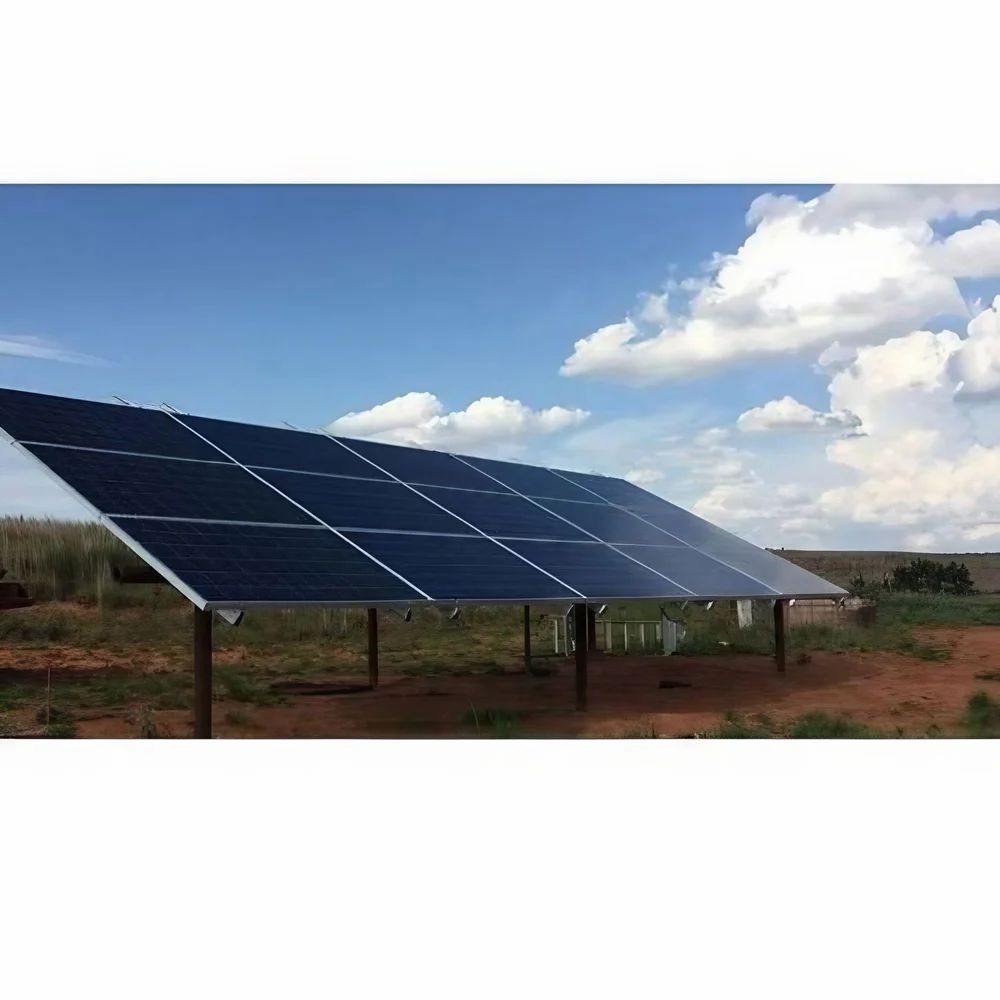 | Solar Power System Usage/Application Commercial Capacity 2 Kw Type Of Plant Off Grid Other Components Mounting Structure Operating Voltage 12 V Established as a... View product → |
 | Solar Power System ₹1575000 Usage/Application Commercial Capacity 45 KW Type Of Plant Grid Tie Other Components Mounting Structure Warranty Of Solar Panels 30Years**, 10 - 24... View product → |
Frequently asked questions
What electricity details should you give a commercial PV installer?
Provide the latest electricity bill, sanctioned load, contract demand, supply voltage, transformer details and single-line diagram. LT and HT consumers can require different metering, protection, approvals and synchronisation arrangements.
How should you size a commercial solar system in Nashik?
Use usable electricity demand, operating hours, roof area, shading, structural limits and local weather conditions. Separate daytime load from total monthly consumption before selecting system capacity.
What should a commercial PV quotation include?
Compare the complete DC and AC design, including modules, inverters, strings, DC isolators, surge protection, cabling, earthing, AC panels, protection devices, monitoring and grid interconnection work.
What evidence should an installer provide at commissioning?
Request insulation-resistance results, earthing measurements, protection-test records, inverter settings, as-built drawings, equipment serial numbers, warranties and the commissioning report.
Related products
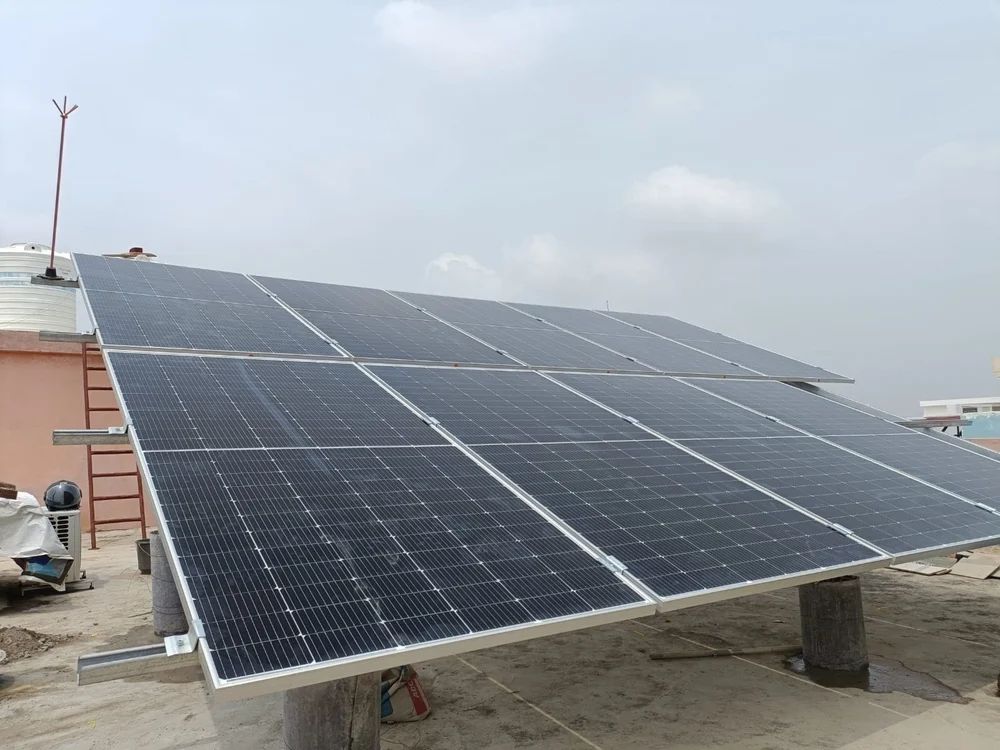 | Solar Power System Capacity 4 kW Warranty of Solar Panel 10 - 24 years Usage Commercial Type Rooftop Country of Origin Made in India Established as a Partnership firm... View product → |
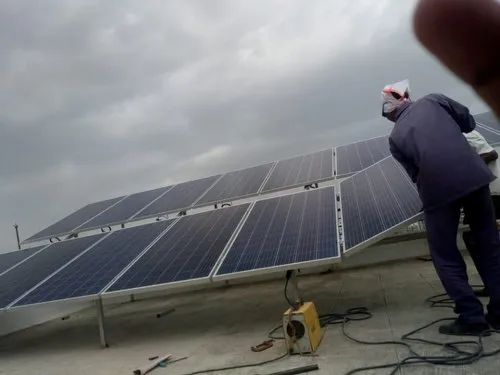 | Solar System Solar Pv System Installation Service Service Location pan india time standard delivery time packging box payment mood online offline duration 2-3 days We at Photon Energies Provides our... View product → |
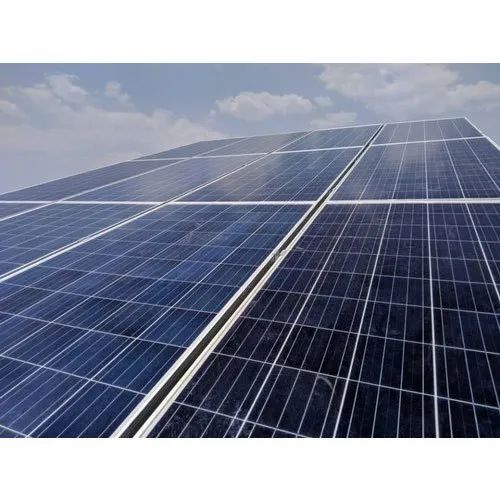 | Solar Power System Capacity 43 KW Type Of Plant Grid Tie Usage/Application Industrial Warranty Of Solar Panels 25 Years** Established as a Partnership firm in the year... View product → |
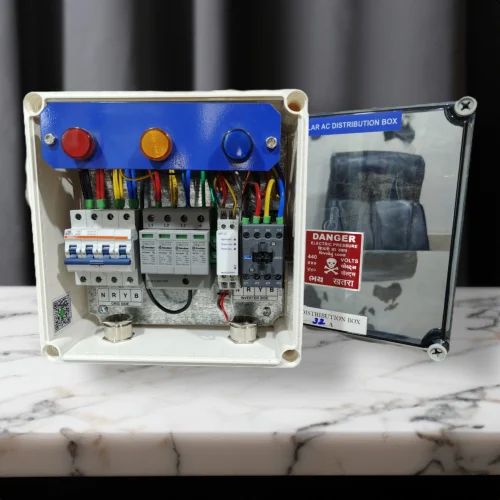 | Solar System Capacity 25 kW Usage Solar Application Home Country of Origin Made in India 3Ph ACDB With NVR (No Volt Relay) 4pole 3phase MCB 32A - C&S Make 3Phase... View product → |
Keywords