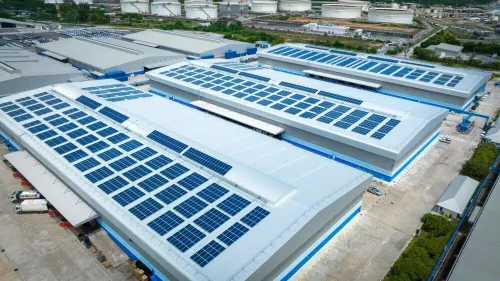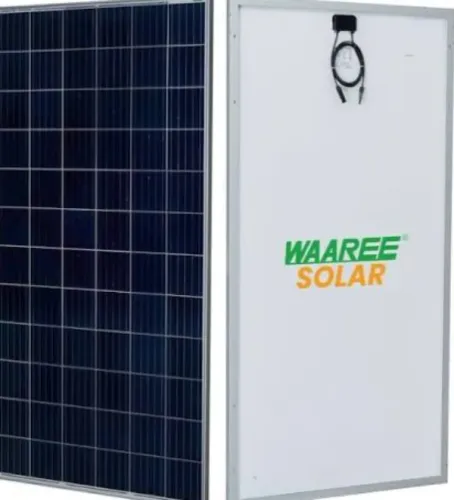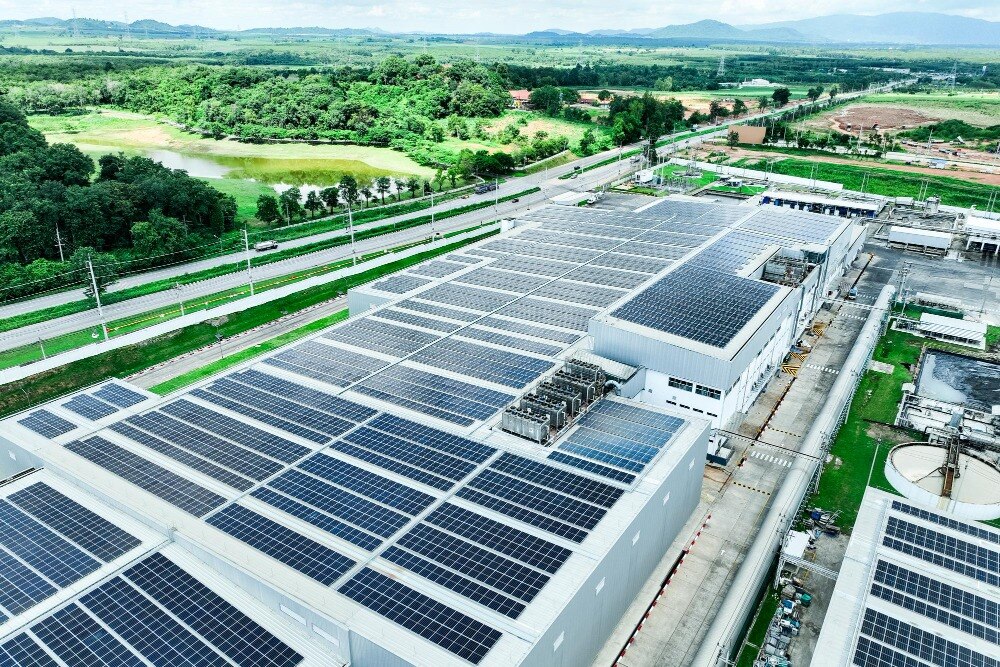
A 4 kW, 5 kW, 10 kW, 43 kW, 45 kW or 65 kW label does not tell you whether a system suits your business. The right choice depends on daytime demand, sanctioned load, roof area, outage requirements, export rules and the equipment included in the quotation.
Key takeaways
- Size the array from 15-minute demand data, operating hours and simultaneous loads.
- Measure usable roof area and identify shade before comparing 4 kW, 5 kW and 10 kW systems.
- Confirm grid connection, export limits and backup circuits before approving the design.
- Demand an itemised quotation covering protection equipment, warranties and future expansion options.
Choose Capacity from Your Load Profile, Not the Product Label
A 10 kW system does not deliver 10 kW continuously: kW is array capacity, while kWh is energy produced and consumed over time. Choose the size from 15-minute demand data, operating hours and simultaneous loads, not from a product list. A shop open from 9 a.m. to 6 p.m.
can use more solar directly than a factory whose largest loads run at night.
For commercial solar for capacity options in Nashik, compare each proposal against your sanctioned load, contract demand, service phase, transformer capacity and distribution-utility interconnection approval.
Ask for both DC array capacity and inverter AC rating; a 5.5 kWp array with a 5 kW inverter is not the same as a 5 kW array with a 5 kW inverter.
| Option | Practical fit | Approximate clear roof area |
|---|---|---|
| 4 kW | Small shop or office with steady daytime use | 320–400 sq ft |
| 5 kW | Small commercial site with higher daytime demand | 400–500 sq ft |
| 10 kW | Three-phase office, warehouse or larger shop | 800–1,000 sq ft |
| 43 kW | Larger warehouse or factory with strong daytime load | 3,440–4,300 sq ft |
| 45 kW | Similar scale; select only if load and approval support it | 3,600–4,500 sq ft |
| 65 kW | Factory or high-demand commercial site | 5,200–6,500 sq ft |
These areas allow roughly 80–100 sq ft per kW, including spacing and access, not just panel footprints. A 4kw commercial solar system in Nashik can outperform a poorly maintained 10 kW array if shade, roof strength, drainage, cleaning access and dust losses are ignored. For backup, define critical-load kW and usable battery kWh separately.
Check Roof Area, Shade and Nashik’s Real Generation Conditions
Allow 4.5–6.5 square metres of usable roof per kWp, including row spacing, maintenance access and parapet-shadow clearance. Plan roughly 18–26 m² for 4 kW, 23–33 m² for 5 kW, and 45–65 m² for 10 kW; compact module packing cannot remove access or fire-clearance needs.
For initial Nashik budgeting, use 4.0–5.0 equivalent full-sun hours daily and a 75–85% performance ratio. That indicates about 1,100–1,550 kWh yearly from 4 kW, 1,400–1,950 kWh from 5 kW, and 2,800–3,900 kWh from 10 kW. These are energy ranges, not guarantees: a 10 kW array does not deliver 10 kW continuously.
Check the proposal against these points:
- Ask for hourly or 15-minute load matching, because a business operating from 9 a.m. to 6 p.m. will self-consume more solar than a night-running site.
- Survey parapets, tanks, nearby buildings and elevated structures in morning, midday and afternoon. Split shaded roof planes across multiple MPPTs or use module-level electronics; one shaded module can reduce a string’s output.
- Require orientation, tilt, temperature-loss, monsoon-cloud, inverter-clipping and downtime assumptions.
- Include Nashik’s dust and agricultural soiling in the yield model, with a cleaning schedule, safe roof access and drainage around mounting structures.
- Verify Maharashtra/MSEDCL export approval, meter requirements and transformer-level restrictions in writing before ordering.
A 5kw solar power system in nashik can underperform a smaller, cleaner, unshaded design if maintenance and shadow losses are ignored.
Match the System to Your Connection and Backup Requirement
Choose grid-tied for premises that can pause during a utility outage and want daytime solar to offset purchased electricity. Standard grid-tied inverters shut down under anti-islanding protection; they do not keep equipment running when the grid fails.
| Option | What it means | When it applies |
|---|---|---|
| Grid-tied | Solar serves daytime loads and exports surplus under the approved connection arrangement | Shops, offices and factories with dependable utility supply and no outage backup requirement |
| Off-grid | Solar, batteries and an inverter supply the site without utility support | Remote premises where no grid connection exists; size storage for night and cloudy periods |
| Hybrid | Solar, grid and batteries work together, with selected loads backed up | Businesses that need lighting, servers, refrigeration or security systems during outages |
For a 10kw solar power system in nashik, match the inverter’s AC rating to simultaneous demand, not the array label. A 4 kW or 5 kW inverter is not automatically single-phase: confirm the sanctioned connection, meter arrangement and interconnection requirement before choosing single- or three-phase equipment.
Permit DC oversizing only within the inverter’s maximum DC power, voltage and current limits.
- Define the backup panel and list priority circuits; whole-building backup needs a larger inverter and battery.
- Specify battery capacity in usable kWh and deliverable kW, then state backup hours, allowable depth of discharge, chemistry, round-trip efficiency and site temperature.
- Check inverter surge capability for motors, pumps and compressors.
- Demand the changeover or islanding equipment and confirm how the system responds to each expected grid outage.
Audit the Quotation, Protection Schedule and Warranty Scope
Do not sign until the quotation states exactly what is being supplied, protected, tested and warranted. Whether it is advertised as a 4kw commercial solar system in nashik or a 5kw solar power system in nashik, confirm the DC array size separately from the inverter’s AC rating.
| Quotation item | Demand in writing | What goes wrong if omitted |
|---|---|---|
| Design and approvals | Module wattage and technology, inverter model, AC rating and phase, mounting design, expected first-year kWh, degradation assumption, monitoring, cleaning access, exclusions, and MSEDCL export approval responsibility | A low rupees-per-kW quote hides missing equipment or an impossible export assumption |
| Protection schedule | DC and AC overcurrent protection, DC and AC isolators, surge protection devices, earthing and bonding, visible isolation, anti-islanding, and lightning protection where the risk assessment requires it | Faults, unsafe maintenance, equipment damage or rejected interconnection |
| Installation scope | Structure anchoring, cable routing, waterproof roof penetrations, labels, earthing connections, meter changes and utility coordination | Leaks, voltage drop, unsafe access or delayed commissioning |
| Commissioning record | Insulation-resistance, polarity, open-circuit voltage, earth-continuity, inverter-function, anti-islanding and generation tests, with readings and dates | A system can appear live while a wiring fault remains hidden |
Ask for separate module, inverter, mounting-structure, workmanship and battery warranties. The document must name the warranty period, exclusions, response time, replacement responsibility, transport costs and whether labour is included; “10–24 years” alone is not a usable promise.
Photon Energies can be asked to itemise these same lines so you can compare proposals on scope rather than capacity alone.
Related products
 | Solar Power System Usage/Application Commercial Capacity 2 Kw Type Of Plant Off Grid Other Components Mounting Structure Operating Voltage 12 V Established as a... View product → |
 | Solar Power System ₹1575000 Usage/Application Commercial Capacity 45 KW Type Of Plant Grid Tie Other Components Mounting Structure Warranty Of Solar Panels 30Years**, 10 - 24... View product → |
Compare Self-Consumption, Export and Expansion Before You Commit
For fair comparison, place every quotation in one sheet. Record module-side DC capacity, inverter AC rating, annual kWh, hourly or 15-minute load matching, export assumptions, cleaning plan and warranty scope. A 5.5 kWp array with a 5 kW inverter is not the same offer as a 5 kW array with a 5 kW inverter.
| Option | Compare | Best fit |
|---|---|---|
| Self-consumption | Daylight generation offsets daytime demand; unused energy is limited | Shops, offices and factories operating through the day |
| Export | Surplus generation crosses the meter under an approved settlement arrangement | Sites with regular daytime surplus after confirming MSEDCL terms |
| Expansion | Start below the roof or sanctioned-load limit, then add modules or inverter capacity | Businesses expecting new machinery, longer hours or added floors |
Before ordering, obtain the applicable Maharashtra and MSEDCL interconnection rule in writing. Confirm net-metering eligibility, the permitted export arrangement, bidirectional meter specification, sanctioned load, contract demand, service phase and transformer-level export restrictions. Do not accept a quotation that values every exported unit at the retail tariff without documentary approval.
For commercial solar for capacity options in Nashik, match the proposal to your present load and a dated expansion plan. A 10 kW solar power system in Nashik is suitable only when the connection, roof, inverter phase and daytime demand support it; capacity alone proves nothing.
Reject a design if future loads would exceed the sanctioned load, or if dust, monsoon drainage and cleaning access are missing from the yield estimate.
Frequently asked questions
How should you choose commercial solar capacity in Nashik?
Use 15-minute demand data, operating hours and simultaneous loads rather than selecting capacity from a product label.
What roof checks affect a commercial solar design in Nashik?
Check usable roof area, structural condition, obstruction shadows and seasonal shade before finalising the array size.
How do connection and backup requirements change the system?
Match the design to your sanctioned connection, phase arrangement, export rules and the circuits that need battery backup.
What should a commercial solar quotation include?
Check the module and inverter schedule, cables, earthing, surge protection, isolators, warranties, installation scope and exclusions.
Should you plan for self-consumption, export or expansion?
Compare daytime consumption with generation, confirm export arrangements and reserve space, inverter capacity or cabling for planned expansion.
Related products
 | Solar Power System Capacity 5 kw Usage/Application Home Other Components Mounting Structure Type Of Plant Grid Tie IP Rating IP45 Warranty Of Solar Panels 10 - 24... View product → |
 | Solar Power System Capacity 4 kW Warranty of Solar Panel 10 - 24 years Usage Commercial Type Rooftop Country of Origin Made in India Established as a Partnership firm... View product → |
 | Solar Power System Capacity 10 KW Type Of Plant Grid Tie Warranty Of Solar Panels 2 - 5 Years*, 25 Years** Country of Origin Made in India Established as a Partnership... View product → |
 | Solar Power System Capacity 43 KW Type Of Plant Grid Tie Usage/Application Industrial Warranty Of Solar Panels 25 Years** Established as a Partnership firm in the year... View product → |
Keywords